Short answer: Start with the job, not the camera. Write down what you need to check, the smallest item you need to measure and how far away you will stand, and the hottest reading you expect. Then ask about reporting software, calibration, repairs in the UAE and training. A camera bought to that list gets used.
Why buying on the spec sheet goes wrong
Most thermal cameras give a clear, colourful picture in the showroom. The problems show up months later: the images are too small to read the item you care about, the reports take an afternoon to write, or the camera goes away for calibration and nobody can do the checks. None of that is on the front of a brochure. All of it can be asked about before you buy.
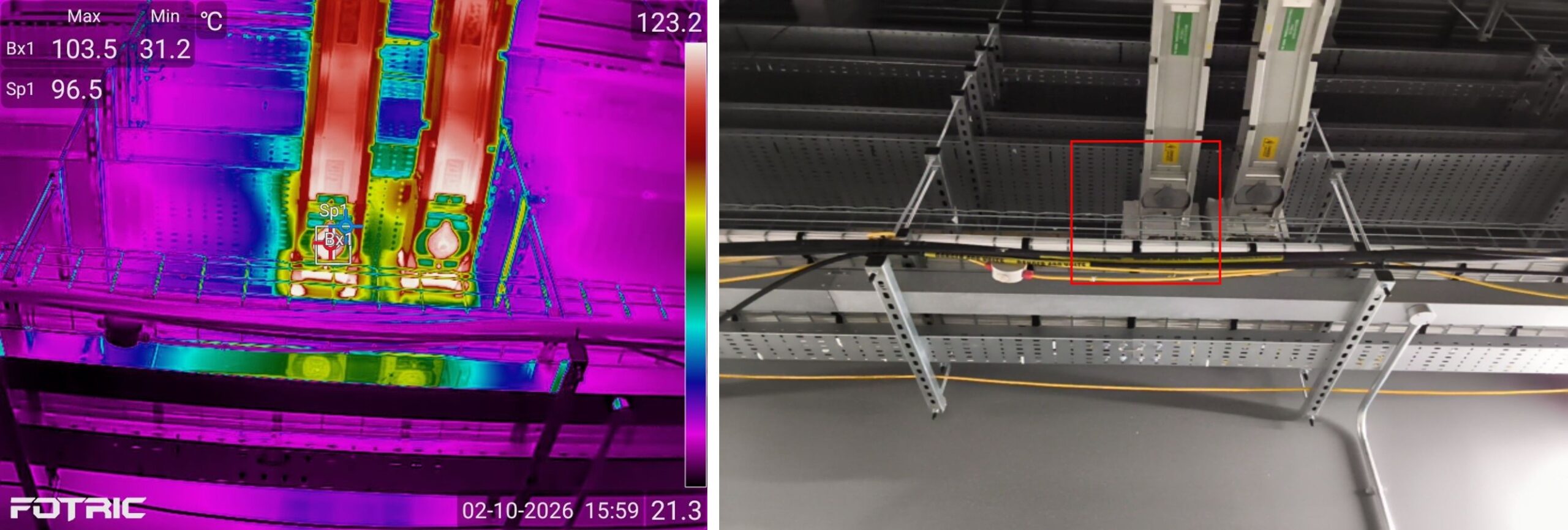
Five things to write down first
- What you will check. Switchboards and distribution boards, motors and bearings, steam lines, roofs, process equipment. Most teams have one main job and two or three occasional ones.
- The smallest item and the distance. Seeing an area and measuring a target in it are different things. A single cable lug inside a panel, seen from behind a safety line, needs more from the camera than a whole motor seen from close up.
- The hottest reading you expect. Check the camera’s measuring range covers it, with room to spare.
- Who will use it, and how often. One trained person every week, or several people now and then. That changes how simple the camera needs to be.
- What happens to the images. A report for your maintenance planner, a work order, a record for your insurer or auditor. The software matters as much as the camera.
Questions to ask the supplier
- Can I try it on my own equipment? A short demo on your boards tells you more than a brochure.
- What does the reporting software do, and is it included or an extra?
- What is the calibration interval, how long is the camera off site for calibration, and is a loan unit available?
- Who repairs it, where, and how long does a repair usually take?
- What training comes with it, and is there a recognised course for the person who will use it?
What’s different in the UAE
- Repairs and calibration. Ask where the camera goes for calibration and repair. If it has to leave the country, plan for the time it is away.
- Sun on outdoor equipment. Outdoor cabinets and rooftop plant pick up heat from the sun. A trained user knows to compare like with like, and when to come back at a different time of day.
- Load. Many sites run lighter at night and at weekends. Panels need to be checked under normal load, so plan when the camera will be used, not just which one to buy.
- Open panels. Most electrical checks need covers off. That means a permit, the right PPE and someone authorised to open the panel, agreed before the camera comes out.
Train before you buy, if you can
People who have done a Category 1 (Level I) course know which features they will really use, and they buy accordingly. If the camera is already on order, book the course before it goes into routine use. More on this: do we need thermography training to use our own thermal camera?
Own camera, outside survey, or both
A camera of your own is good for regular checks on your critical boards and for confirming repairs. It does not replace an independent survey. A Dubai resort hotel books its electrical thermography survey with us every year: one day on site, then the report. Before this year’s survey day our engineer meets their director of engineering to go through last year’s report and agree access. Many UAE sites do both. See when to book your survey.
Proof point
Ti is a Level 3 certified thermographic inspection company. Since 2018 we have trained thermographers for UAE inspection bodies, an energy company, offshore and engineering contractors, and research teams, alongside our own electrical and gas surveys across the Emirates.
Questions we get asked
Can you help us choose a camera?
Yes. Send us your list of what you need to check, the smallest item and the distance. We will tell you what to look for, and whether we can supply it.
Is the most expensive camera the safest choice?
Not always. The right camera is the one that can read your smallest item from where you will stand, with software your team will actually use.
Do we still need a yearly survey if we buy a camera?
Usually yes. Your own camera covers regular checks. A survey covers the whole site and gives you an independent report.
Should we buy a handheld camera or fixed cameras?
A handheld camera suits regular rounds across many items. Fixed cameras suit the few items you need watched around the clock. Some sites use both. See making the business case for a fixed system.
Can our team be trained on the camera we buy?
Yes. It helps to bring the camera you will use at work to the course, so the practical parts match what you will do on site.
Talk to us: +971 4 560 7296 · sales@thermalimaging.ae · Contact us