Short answer: Build it around one area you can’t afford to lose, not around the cameras. Say what is in that area, how it is checked today and what is missed between checks. Then price the whole job, not just the cameras, and propose a small starting set with a clear test of whether it works.
Start with one area, not the whole site
A request for “thermal cameras across the site” is hard to approve. A request to watch one battery store, one switchroom or one waste bunker around the clock is easy to understand. Pick the area where a fire or a failure would hurt most, and write down three things:
- What is in it: stock, equipment, people, and what it would cost to replace or be without.
- What happens if it goes wrong: downtime, lost orders, a site shutdown, a claim.
- Who would notice first today, and how long that could take outside working hours.
Show the gap between checks
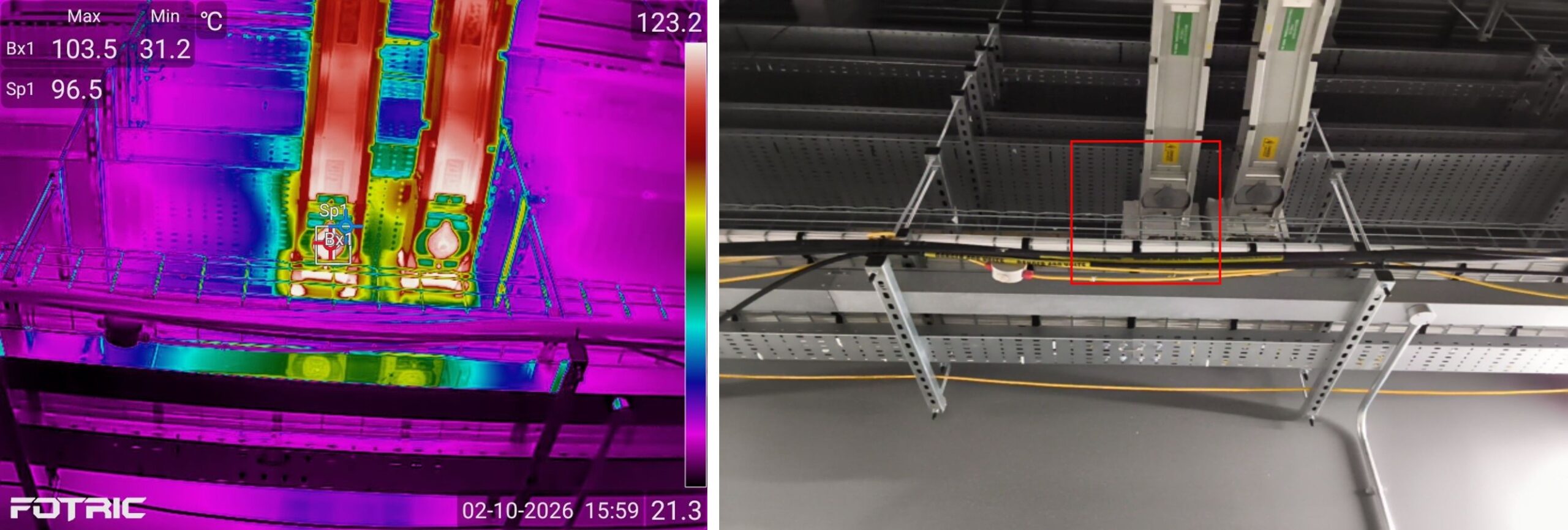
Most sites already do something: a yearly thermography survey, a walk-round, smoke detection. Say so, and be fair about it. Then show what none of them cover. A survey is a snapshot on one day. A walk-round depends on someone looking at the right thing at the right time. A fixed camera watches the same area every hour of every day and raises an alarm when temperatures start to climb, which is the gap a business case should be about.
Price the whole job
Cases come back from finance when costs appear later. Put all of these in the first version:
- Cameras, and the enclosures, sunshades or cooling each position needs.
- Installation, cabling and any access equipment.
- Software, and connecting alarms to your control room, CCTV, BMS or fire panel.
- Commissioning, with every alarm area tested.
- Training for the people who will receive the alarms.
- Support after the first year: health checks, software updates, spares.
A supplier can give you a budget figure for a small starting set from a few photos. Use that for the first conversation, and say clearly that a firm price follows a site visit.
Propose a starting set with a test
Ask for approval for the one area first. Agree up front what “working” means: alarms arrive where they should, the right people respond, false alarms are rare enough that nobody starts ignoring them. Review it after a few months. If it works, the case for the next area writes itself.
Bring the right people in early
- Operations or facilities: they own the area and the response.
- Security or the control room: they will see the alarms.
- IT or controls: network, video system and SCADA connections.
- HSE: permits for installation and any hazardous-area rules.
- Your insurer or broker: ask whether continuous monitoring of a high-risk area affects their view of the risk. Get their answer in writing rather than assuming.
From our UAE work
When a Dubai logistics operator asked us in October about a fixed camera system for their EV battery store, the conversation started with one area, not the whole warehouse: how big the store is, how the batteries are racked, where the alarms should go, and a few photos. That is the shape of a case that gets approved.
Proof point
The SENSIA fixed cameras we supply run on SENSIA’s RedLook software, which manages several cameras from one system and connects over standard protocols: MODBUS TCP, OPC, HART and ONVIF. That means a starting set in one area can grow into more areas on the same system, and alarms can go to the systems your team already watches.
Questions we get asked
Can you give us a figure for the business case before a site visit?
A budget figure for a small starting set, yes, from a few photos and answers about the area. A firm price follows the site visit.
Does a fixed system replace our yearly survey?
Usually not. The fixed cameras watch the areas that matter most all the time; the survey still covers the rest of the site and gives an independent report.
What if the area is outdoors?
Then the case needs the enclosure and sunshade for each position, and the camera’s operating range checked against the site, before anything is ordered.
Who should own the system once it’s in?
Whoever owns the response. If the control room will act on alarms, they need to be part of the case and the training.
Can we start with one camera?
Sometimes. It depends on the size and layout of the area. The site visit tells you how many it takes to cover it properly.
Talk to us: +971 4 560 7296 · sales@thermalimaging.ae · Contact us